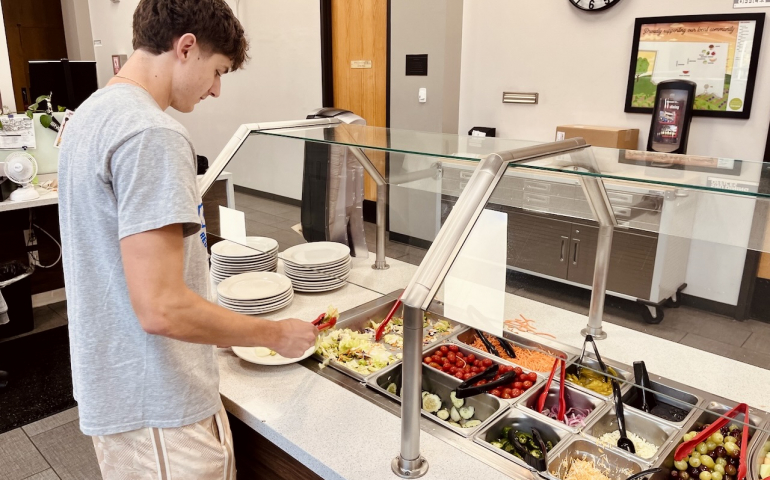
At Southern Nazarene University, performance begins long before the first whistle of practice or the tip-off on game days–it starts in the cafeteria, at the dining table, and even in the snacks athletes choose between classes. For sophomore and junior guards Xavier Ridenour and Joe Mpoyo, nutrition is more than routine; it is a daily commitment that fuels their bodies, sharpens their focus, and prepares them for the grind of Division II basketball.
Ridenour described his eating habits as both structured and casual. “I would describe them as good meals–three solid meals with breakfast, lunch, and dinner,” he expressed. “A lot of good protein, carbs, and other nutrients to fuel the student-athlete body.” While he does not follow a strict diet, he’s intentional about making sure his meals support performance. “I follow a diet that has a lot of protein, which is good for muscle growth and performance. No specific diet, just what the cafeteria provides.”
When asked about go-to game-day meals, Ridenour did not hesitate: “Probably pasta of some sort–chicken alfredo. That is usually what I like before games.” For recovery, he keeps things simple but effective. “Granola bars and protein bars help me a lot, and maybe some fruit to give me some more energy,” he explained.
Mpoyo takes a similar, though slightly more intuitive, approach to his diet. “I try to keep my eating habits consistent and balanced,” he expressed. “Most of my meals include a good source of protein, complex carbs for energy, and vegetables for vitamins and minerals. I make sure to stay hydrated throughout the day because it makes a big difference in both my energy levels and performance.”
Like Ridenour, Mpoyo does not follow a strict diet plan, but he is mindful of how food affects his performance. “I do not follow a strict diet plan, but I do eat with purpose. Heavy or greasy foods make me sluggish, so I stick to lighter, nutrient-dense meals, especially on practice and game days,” Mpoyo stated.
Mpoyo’s daily meals typically include eggs, toast, and fruit for breakfast; chicken with rice and vegetables for lunch; pasta, chicken, or fish for dinner; with snacks like granola bars or smoothies as needed. For pregame fuel, he focuses on carbs for energy. “About 2–3 hours before, I’ll have something like pasta, rice bowls, or a turkey sandwich. If I need a quick boost closer to game time, I’ll grab a banana or an energy bar,” he conveyed.
Recovery is another key part of his plan. “After workouts, I go for a mix of protein and carbs to help my muscles recover and restore energy. A protein shake with fruit, chocolate milk, or a chicken wrap are some of my go-to options,” Mpoyo explained.
For both Ridenour and Mpoyo, nutrition is more than just eating–it is about preparation, performance, and recovery. Their food choices demonstrate that even without the resources of Division I programs, Division II athletes can perform at their maximum potential by fueling their bodies with discipline and intentional meals. What happens on the plate is just as important as what happens on the court.
Photo by: James Burries